

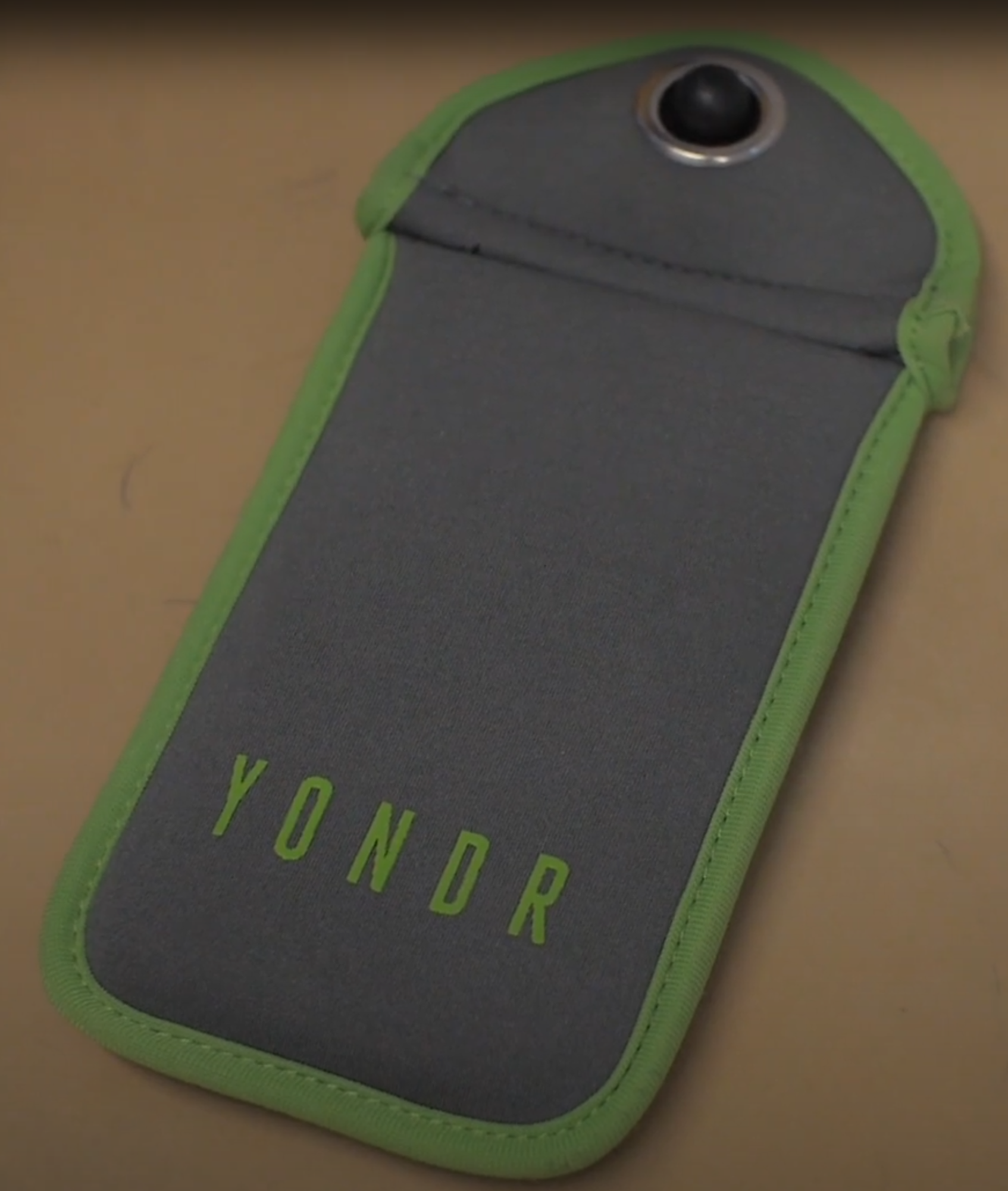
Yondr Pouches are a patented pouch design with a magnet to lock and unlock the pouch. When locked, the pouch is sealed shut until a magnet is used to unlock it. Yondr Pouches allow students to keep their phones on them but out of usable reach.
Iowa House File 782 is an Iowa state law signed in April 2025 that requires school districts to restrict student usage of personal electronic devices.
Colo Nesco Senior High School in Colo, Iowa implemented Yondr Pouches at the beginning of the 2025-26 school year. Each student is assigned a pouch, which they are responsible for the entire school year. Students are in charge of locking their phones, headphones, and watches in the pouch before their first period begins.
Each teacher has a magnet to unlock the pouches at the end of the day, or in certain classes with exceptions.
Xavier Kingsbury, a student at Colo Nesco Senior High School, told The North Star, “I think what’s keeping our phones away isn’t so much the Yondr Pouches, but it’s just the message that [the school is] taking it more seriously than [it was] before.”
More schools aren’t adopting the idea of Yondr Pouches or similar technology because of the cost. A bag costs around $30-$35 per student which isn’t realistic for some schools.
Bloomington High School North Principal Matthew Stark said he had looked into Yondr Pouches even before the state law was passed, “It would cost about $58,000 for just Bloomington High School North. So I don’t know if that may be a deal breaker. The other part is, [students are] already figuring ways around those.”
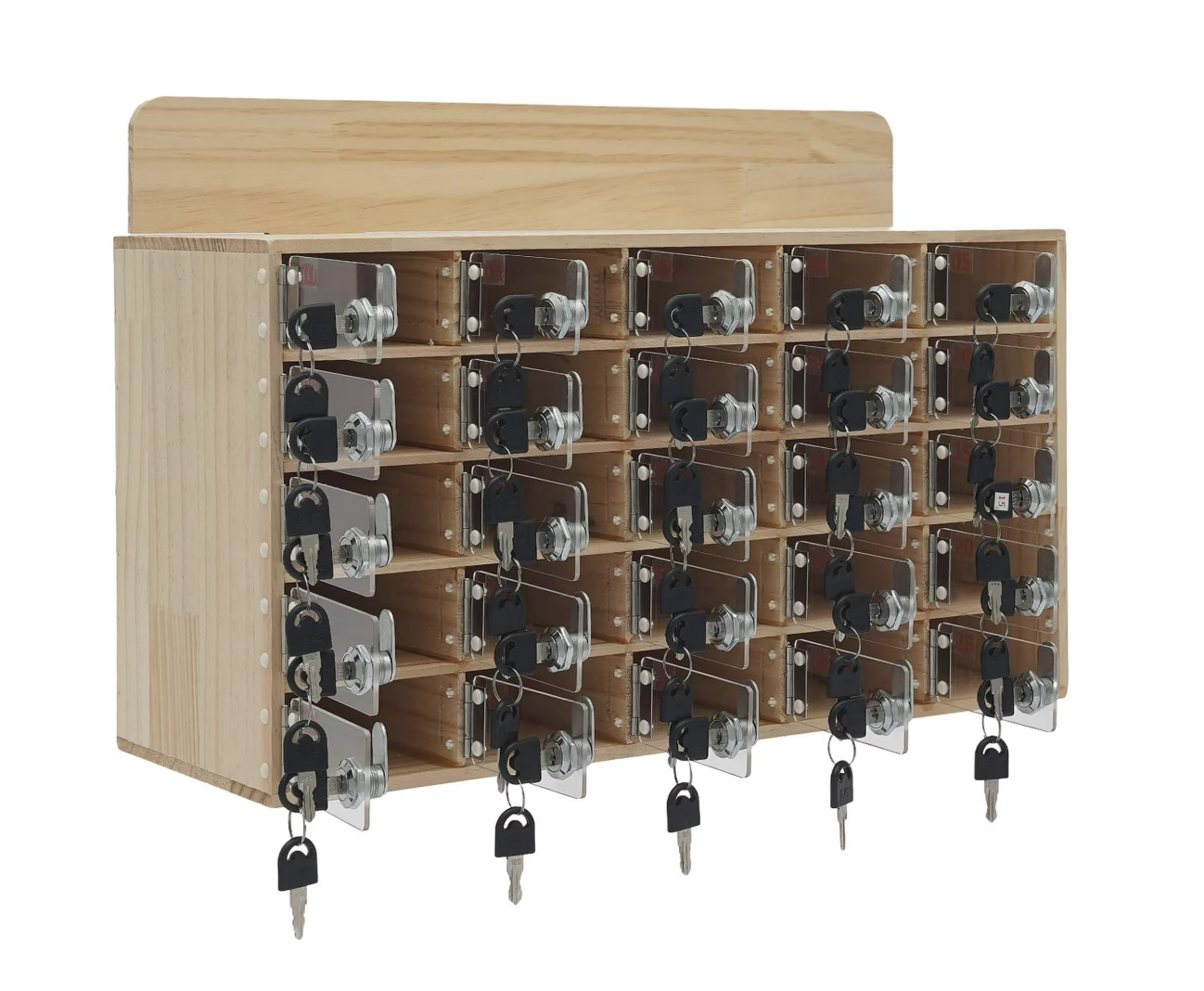
Another way to implement a school phone ban is for teachers to use phone cubbies or other storage systems. The idea would be that each teacher has a hanging phone pouch or a cell phone cubby which the students are responsible for putting their phones in at the start of each
class. Teachers are responsible for monitoring students and making sure their phones are away and secured. This solution is much cheaper and more sustainable for schools to monitor, but leaves implementation completely on teachers.
Florida House Bill 1105 states that elementary and middle school students are not permitted to use personal communication devices during the school day, and high school students are only allowed if a teacher explicitly allows it for educational purposes.
Jamie Wissner, a student from Oviedo High School in Oviedo, Florida said, “It just depends on the teacher, but that’s the only way they really implement and enforce it is just telling you to put your phone in the cubby.”
Using in-class storage systems comes with the cost of using class time to convince students into securing their phones away. For schools with shorter class times this can become a burden for teachers and their lesson plans.
Junior at Oviedo High School Autumn Dilmore said, “For high school it’s awful because you can’t just focus on the teachers teaching the kids, there’s this focus on making sure you have your phone up and it’s just very annoying when it’s normally about five minutes in a 45-minute class period.”

The cheapest way to implement a school-wide phone ban is to make students keep their phones secured in bags, cars, or not bringing them on campus. This system is harder for teachers to manage and doesn’t eliminate the temptation for kids to reach for their phones. With such a loose implementation, discipline often has to be stricter.
A junior from West Pontiac High School in Belle Haven, Virginia, Nora Fitzpatrick, said, “The issue is that when [phone usage] keeps happening, the more it happens, it is such a pain to fill out a form and report someone, the majority of the teachers just don’t feel it’s worth it anymore.”
Virginia Senate Enrolled Act 108 states that every school district develops appropriate policies prohibiting student usage of any personal device that can connect to the internet and wirelessly collect, process, and share data.
Fitzpatrick said, “The issue with what my school district is doing is that they’re kind of leaving it up to the teachers. They’re saying it’s a ban, but how to enforce it is left up to the teachers and that is when it gets wishy-washy, because as a teacher, you can only do so much.”
Although this approach doesn’t work for every school, it seems to have worked for at least one: a history teacher from the state of Texas that spoke to The North Star under the condition of anonymity because they’re not authorized to speak for their district said that their schools’ failure rates have reduced by half and students have been much more socially involved.
One of the biggest concerns from parents and students about cell phone policies is the safety aspect. Many families are worried on how to reach their children in the case of a school emergency. Most schools have addressed this concern by allowing students to bring devices with them on campus but having to store them away during the school day.
Wissner, a junior from Florida, said, “I think when it’s something like … you’re just not allowed to have it during class, it’s not too much of a safety issue because your teacher will be there if something happens but I think in cases where the bans are more severe it’s definitely a safety issue.”
Another concern with the device bans is the pressure it puts on teachers. In some schools the teacher can get in trouble if a student is caught on their phone, since they are supposed to be implementing the law.
Alabama House Bill 166, known as the Freeing Our Classroom from Unnecessary Screen for Safety (FOCUS) Act, took effect on July 1, 2025. It states that all school districts decide how to implement a ‘bell to bell’ device ban, and requires schools to block access to social media, and inappropriate websites on all school devices.
Amber Bess, a seventh grade English teacher in Madison, Alabama, said, “I feel like we already have so much that we’re responsible for. I do feel like a lot of the things the state decides, especially here in Alabama, that nobody really listens to what the teachers are saying and doing. … I feel like [students are] always going to find a distraction and it’s a lot of work on our behalf just to remind them every day.”